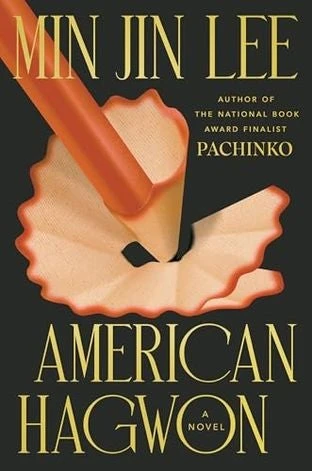
American Hagwon
A sprawling family saga that follows the Kohs from Korea to Australia to California, where education becomes both a lifeline and a burden. It is the kind of book that makes you want to call your parents and ask what they gave up.
We are reading Min Jin Lee's American Hagwon, a family saga that crosses Korea, Australia, and California. Bring slippers and an appetite, the kettle will already be on.
Best for: A club that likes big-hearted family stories and lingering past dessert to talk about their own families
Discussion
Warm-up
- 1.Where were you when you read most of this book, and did you find yourself reading it slowly on purpose?
- 2.Think back to your own school years: was there a class, a tutor, or a cram-session that your family treated as a big deal? How did that feel at the time?
Digging in
- 1.The Kohs keep starting over in new countries. Which of their small attempts at making a place feel like home (a meal, a routine, a job) stayed with you the most?
- 2.This is a book about education as love, pressure, and survival all at once. When in your life has someone pushed you hard because they cared, and how do you feel about it now?
- 3.Min Jin Lee writes parents with so much tenderness even when they falter. Was there a moment where you forgave a character before you expected to?
- 4.Moving from Korea to Australia to California, the family carries some things and lets others go. What would you refuse to leave behind if you had to move twice in one decade?
Going deep
- 1.By the end, how did your feelings about what the parents gave up (and what they asked in return) shift from where they started? Try not to name specifics, just describe the change in you.
- 2.The book sits with the cost of ambition for a long time. Did you come away feeling more comforted or more unsettled about what we owe the people who raised us?
On the table & to sip
To eat
To sip
Run of show
Host tips
- Make the stew the day before. It tastes better reheated and it frees you up to actually host.
- Say out loud at the start that nobody has to finish the book to join the conversation. The warm-up and theme questions work either way.
- When someone starts telling a story about their own parents, let it run. That tangent is the whole point of this night.
Playlist
Soft piano, warm vinyl crackle, and 90s Korean ballads: music for a kitchen with the lights low and the stove still on.
- 01 Spring Day - BTS
- 02 Through the Night - IU
- 03 Dear Moon - Yiruma
- 04 Love, Ya - Kim Gwang-seok
- 05 Beautiful Days - Jaurim
- 06 Shanghai Romance - Orange Caramel
- 07 To You - Jannabi
- 08 Home - Roy Kim
Trivia
- 1.Min Jin Lee is best known for which 2017 novel about a Korean family in Japan? (Pachinko.)
- 2.What is her debut novel, published in 2007? (Free Food for Millionaires.)
- 3.What does the Korean word hagwon refer to? (A private after-school academy or cram school.)
- 4.Min Jin Lee was born in Seoul and moved as a child to which American city? (New York City.)
- 5.Before becoming a novelist, what profession did Min Jin Lee train and work in? (Law (she was a corporate lawyer).)
- 6.Pachinko was a finalist for which major American book award? (The National Book Award for Fiction.)
- 7.American Hagwon completes a loosely connected trio of books by Lee about the Korean diaspora, sometimes called what? (Her Korean diaspora trilogy.)
- 8.The Koh family's moves in this novel take place primarily in which decade? (The 1990s.)
Bookmarks
Print, cut, and tuck one at every seat, a small keepsake from the night.
“The kettle is on and the homework can wait.”
“Three countries, one recipe, same stubborn love.”
“Some families pack hope the way others pack dishes.”
Rate the book
We hope the company was good and the conversation even better. Until the next chapter.