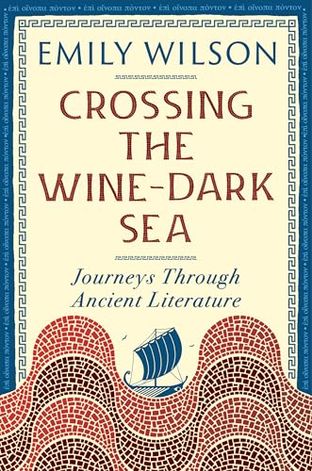
Crossing The Wine Dark Sea
Emily Wilson, the acclaimed translator of the Iliad and the Odyssey, opens the door to her workshop and shows what it actually takes to carry ancient Greek poetry into modern English. It is a short, generous piece about words, choices, and the strange intimacy of living inside someone else's sentences.
Soup in mugs, honey and walnuts, and one short, beautiful piece about what it takes to carry an ancient poem into our language. No Greek required, just bring your favorite untranslatable word.
Best for: A club of word lovers and slow readers who like a short, rich piece and a long, unhurried talk about it
Discussion
Warm-up
- 1.Where did you first meet Homer, if you have: a classroom, a children's version, a film, a myth someone told you? Tell us about that first encounter and how it felt.
- 2.Is there a word in a language you know that you have never been able to translate for someone? Say it out loud for us and try anyway.
Digging in
- 1.Wilson treats every word choice as something that matters. Was there a moment in her explanation of the work that made you feel protective of a particular word or phrase?
- 2.The sea in Homer is famously described with colors that do not match what we see. How did sitting with that strangeness make you feel: unsettled, delighted, a little homesick for a world we cannot quite picture?
- 3.Translation asks someone to speak in another person's voice for years at a time. Have you ever had to carry someone else's words faithfully (a letter, a eulogy, a grandparent's story), and what did that feel like in your body?
- 4.The Odyssey is, at heart, about trying to get home. What did reading a piece about that poem stir up in you about your own idea of home right now?
Going deep
- 1.Wilson makes the case that there is no neutral translation, that someone is always choosing. Did that comfort you or unsettle you, and did it change how you feel about any beloved book you have only read in English?
- 2.By the end of the piece, what feeling were you left holding: awe at the difficulty, warmth toward the translator, restlessness to go read Homer, something else entirely? Try to name it without summarizing how she gets there.
On the table & to sip
To eat
To sip
Run of show
Host tips
- The piece is short, so bring a copy of a Homer passage in two different translations and read both aloud. Hearing the difference does more than any explanation.
- Reassure people up front that nobody needs to have read the Odyssey or know any Greek. This night rewards curiosity, not credentials.
- Keep the lighting low and the soup on the stove so latecomers can slip in warm and unembarrassed.
Playlist
Low, unhurried strings and salt air. Music for a long table, a lit candle, and a book open face down.
- 01 Gymnopedie No. 1 - Erik Satie
- 02 Re: Stacks - Bon Iver
- 03 Nikos - Vangelis
- 04 The Rain - Nils Frahm
- 05 Zorba's Dance (Sirtaki) - Mikis Theodorakis
- 06 Harvest Moon - Neil Young
- 07 Cavatina - Stanley Myers
- 08 Ithaca - Ludovico Einaudi
Trivia
- 1.Emily Wilson became widely known in 2017 for being the first woman to publish what in English? (A translation of Homer's Odyssey.)
- 2.Which second Homeric epic did Wilson also translate, published in 2023? (The Iliad.)
- 3.Wilson's Odyssey is famous for matching the original line count using which English meter? (Iambic pentameter.)
- 4.The phrase 'wine dark sea' translates a Greek epithet built around which drink? (Wine (oinos), in the compound often rendered oinops.)
- 5.Wilson teaches classical studies at which American university? (The University of Pennsylvania.)
- 6.The Odyssey's hero spends the poem trying to return to which island home? (Ithaca.)
- 7.Homer's epics were composed in which poetic meter? (Dactylic hexameter.)
- 8.The Victorian statesman William Gladstone drew attention to Homer's unusual use of what, which scholars still debate? (Color words.)
Bookmarks
Print, cut, and tuck one at every seat, a small keepsake from the night.
“Every old word arrives wearing someone else's coat.”
“Sea the color of wine, and a mug in your hands.”
“Take the long way home. The soup will keep.”
Rate the book
We hope the company was good and the conversation even better. Until the next chapter.