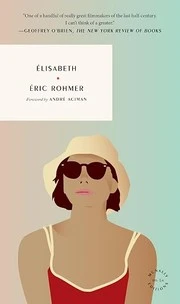
ElisabethBook club questions, food & host guide
 Library Science
A cozy book club night for Elisabeth by Éric Rohmer. Includes 8 spoiler-free discussion questions, food and drink pairings, a playlist, and a host guide, ready to print and share.
A small club that likes slow, mood-forward books and conversations that wander gently
Buy links are affiliate links; we may earn a small commission, at no cost to you.
A young French writer's only novel, published in 1946 before he became one of cinema's great observers of hesitant hearts, Elisabeth is a quiet study of attraction, self-deception, and the small moral wobbles of ordinary days. It is short, atmospheric, and full of the kind of inner weather that book clubs love to compare notes on.
Why it works for clubs
- Under 250 pages, so everyone actually finishes it
- A rare early work by a filmmaker people know from the screen, not the page
- Interior, feeling-driven storytelling that invites personal reflection over plot debate
- Mid-century French mood that pairs beautifully with soft lamps and warm drinks
Warm-up questions
- 1 Before we talk about the book at all: where did you end up reading it, and did the place and the season start to blend into the story's atmosphere for you?
- 2 This was written by a young man who would later become a filmmaker. What did the book look like in your head? Pick one image you kept seeing and describe it to us like a photograph.
Digging in
- 1 Rohmer's people are forever talking themselves into and out of their own desires. Was there a moment where that felt tender and familiar to you rather than frustrating, a moment where you thought, oh, I have done exactly that?
- 2 There is a particular kind of loneliness in this book that is not unhappy, just unaccompanied. Did any of it feel comforting to read, like company? Or did it ask something of you?
- 3 The book sits in a France still catching its breath after the war, though it rarely says so loudly. How did that quiet, unspoken backdrop make you feel while you were reading?
- 4 What small, ordinary detail (a room, a walk, a stretch of weather, a conversation that went nowhere) stayed with you longest after you put the book down, and do you know why it chose you?
Going deep
- 1 By the last stretch, the distance between what someone wants and what they will admit to wanting has grown quite wide. Thinking about the book as a whole, where did your sympathy settle, and did it surprise you that it settled there?
- 2 Rohmer spent his whole later career filming people who talk beautifully and choose badly. Having lived with this early book, what do you think he already understood about how people handle their own hearts, and is that a generous view of us or a hard one?
On the table
To sip
Soft piano, hushed French voices, and rainy-window strings at low volume, the sound of a lamplit room where nobody wants to leave.
Tap a track to play it. Full songs play when you're signed into Spotify.
Run of show
Host tips
- Say out loud at the start that finishing the book was never required. This one is short but inward, and the better conversation comes from people who feel safe admitting they drifted.
- Cook everything that can be cooked in the afternoon. The gratin and the tart both reheat happily, so you are hosting rather than plating.
- When a silence falls after a question, count to eight before rescuing it. Rohmer's whole subject is what people do not say, and your group will fill the gap themselves.
Come read the only novel Eric Rohmer ever wrote, back when he was young and not yet famous, then come sit with us over gratin, warm spiced wine, and hot chocolate. Soft clothes encouraged, finishing the book optional.
Trivia
-
1
Elisabeth was published in 1946 under a pen name rather than the author's famous one. What pen name did he use?Answer: Gilbert Cordier.
-
2
Eric Rohmer was itself a professional name. What was the author's birth name?Answer: Maurice Scherer (Jean Marie Maurice Scherer).
-
3
Rohmer became far better known in another art form entirely. Which one?Answer: Filmmaking. He became a central director of the French New Wave.
-
4
Before directing, Rohmer edited one of the most influential film magazines in history. Name it.Answer: Cahiers du cinema.
-
5
Elisabeth is a novel, which makes it unusual in Rohmer's body of work. How many novels did he publish?Answer: One. This is his only novel.
-
6
Rohmer's films were famously grouped into themed cycles. What was the first and most famous cycle called?Answer: Six Moral Tales (Six contes moraux).
-
7
What country and language was Elisabeth originally written in?Answer: France, in French.
-
8
Rohmer's work is known for a particular kind of dialogue. What do his characters famously spend most of their time doing?Answer: Talking, at length and very articulately, about their own feelings and choices.
Bookmarks
Rate the book
Print pack
- Question cards on soft cream stock, one per card, shuffled in a bowl so nobody feels quizzed
- Three bookmark designs printed on card, cut and left in a dish by the door as take-homes
- Half-page scorecards with a pencil, filled in together over dessert
- A single-sheet trivia round with the answers folded under, passed hand to hand
- Small handwritten place cards naming each dish and drink, so people can serve themselves without asking
Get the kit in your inbox
We'll email you this kit now, then a friendly nudge before your meeting so planning never sneaks up on you.
Run this night with your club
Get a free club page with one link to text your group. They add their name, nominate books and vote on the next pick. No accounts, no passwords.
More book club night kits
Ready-made nights for other books your club might pick next.


Build a free kit for any book
Pick your next read, choose a vibe, and get discussion questions, food and drink pairings, a playlist, and a host guide in about a minute.
Build my night