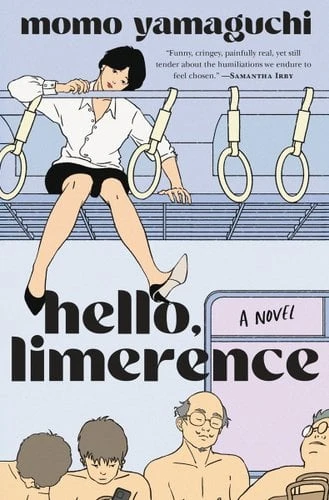
Hello, LimerenceBook club questions, food & host guide
 TeaTime Book Club
A cozy book club night for Hello, Limerence by Momo Yamaguchi. Includes 8 spoiler-free discussion questions, food and drink pairings, a playlist, and a host guide, ready to print and share.
A close, affectionate club that likes feelings-first conversation and does not need a plot puzzle to get going
Buy links are affiliate links; we may earn a small commission, at no cost to you.
A tender, aching look at the kind of crush that takes over a whole inner life, told with the quiet intimacy of a story you want to read under a blanket. It is short enough to finish in a weekend and emotional enough to talk about all night.
Why it works for clubs
- The title names a feeling almost everyone has had but rarely discusses out loud
- Longing, fantasy, and projection give every reader a private story to share
- Quiet, interior storytelling leaves lots of room for personal interpretation
- Easy to finish, so nobody arrives apologetic and unprepared
Warm-up questions
- 1 Before we talk about the book at all: when you first saw the word limerence, did it feel like a word you had been missing, or like a word for something you would rather not name? Tell us in one breath.
- 2 Where did you do most of your reading of this one, and did it want a particular kind of light or weather? Some books ask for a warm drink and a closed door.
Digging in
- 1 The book treats a private, mostly unspoken feeling as something worth a whole story. Did that make you feel seen, or a little exposed? No wrong answer tonight.
- 2 Limerence lives on small evidence: a glance, a message, a coincidence read as fate. Which small moment in the book made your chest tighten with recognition?
- 3 There is comfort in the imagined version of a person, because they never disappoint you. Did the book make you gentle toward that comfort, or impatient with it?
- 4 Yamaguchi lets a lot happen in silence and in the space between what is said and what is meant. Which quiet stretch of the book did you find most soothing to sit inside?
Going deep
- 1 Without giving anything away about where it lands: did the book leave you feeling tender toward your own younger, more hopeless-crush self, or did it ask you to forgive that self for something? Share only as much as you want.
- 2 By the last pages, did the story feel like a warm hand on your shoulder or a door closing softly in another room? Describe the feeling it left in the house afterward, not the events.
On the table
To sip
Hushed, warm, and slightly wistful: felt piano, soft city pop, and vocals that sound like they are being sung in a small room.
- 03 Lover's Rock - Sade
- 04 Mizu No Naka No Himitsu - Taeko Onuki
- 06 Lovers - Fujii Kaze
- 08 Everything In Its Right Place (Instrumental Cover) - Christopher O'Riley
Tap a track to play it. Full songs play when you're signed into Spotify.
Run of show
Host tips
- Say out loud at the start that nobody has to share a personal crush story. Permission to pass keeps the room honest.
- Keep the food in reach of the seats, not on a distant table. People stay vulnerable when they do not have to get up.
- When a silence lands after a deep question, count to seven before filling it. The best answers in a cozy room arrive late.
We are reading Hello, Limerence by Momo Yamaguchi and talking about the crushes that lived entirely in our heads. Warm drinks, soft bread, no analysis required, blankets provided.
Trivia
-
1
What does the psychological term limerence describe?Answer: An involuntary state of intense romantic infatuation and obsessive longing for another person.
-
2
Which psychologist coined the word limerence?Answer: Dorothy Tennov, in her 1979 book Love and Limerence.
-
3
Is the author's name, Momo Yamaguchi, given in Japanese order or Western order on the English cover?Answer: Western order, given name first, which is standard for English-language editions.
-
4
What does the given name Momo commonly mean in Japanese?Answer: Peach, often written with the character for the peach tree.
-
5
Hello, Limerence opens with a greeting addressed to a feeling. What rhetorical device is that?Answer: Apostrophe, directly addressing an absent person, thing, or abstraction.
-
6
What is the Japanese term for the fluttering, heart-pounding feeling central to stories of infatuation?Answer: Tokimeki (often rendered as a heart-skip or flutter).
-
7
In literary terms, what do we call a story driven mainly by a character's inner thoughts rather than external events?Answer: Interior or introspective narrative, sometimes called a quiet novel.
-
8
Yamaguchi is a Japanese surname and also the name of what else in Japan?Answer: A prefecture (and its capital city) at the western end of Honshu.
Bookmarks
Rate the book
Print pack
- Question cards on soft cream stock, one per guest to read aloud
- Printable mug collars so nobody loses their hojicha
- Three-line bookmark set to cut and take home
- Fill-in cozy scorecards with a space for one word
- A small porridge-bar topping label sheet
Get the kit in your inbox
We'll email you this kit now, then a friendly nudge before your meeting so planning never sneaks up on you.
Run this night with your club
Get a free club page with one link to text your group. They add their name, nominate books and vote on the next pick. No accounts, no passwords.
More book club night kits
Ready-made nights for other books your club might pick next.






Build a free kit for any book
Pick your next read, choose a vibe, and get discussion questions, food and drink pairings, a playlist, and a host guide in about a minute.
Build my night