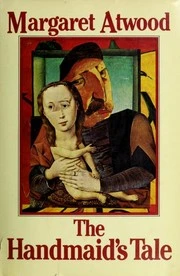
The Handmaid's Tale
Margaret Atwood's 1985 novel follows a woman called Offred living under a rigid theocratic regime that has rewritten every rule about women's lives. It is unsettling and beautiful at once, and it leaves people wanting to talk softly and honestly about memory, freedom, and small kindnesses.
Come read a serious book in the softest room we can build: a pot of potato leek soup, hot spiced cranberry, and a long slow talk about what we would hold onto. Slippers encouraged, finishing the book optional.
Best for: A club that likes a serious book softened by blankets, soup, and gentle, personal conversation
Discussion
Warm-up
- 1.Where did you do most of your reading of this one, and did you need a blanket, a snack, or a break halfway through?
- 2.The narrator notices tiny physical comforts (a warm bath, butter on skin, sunlight on a floor). Which small comfort in your own daily life would you miss most?
Digging in
- 1.Offred holds onto scraps of her old life like treasures. What scrap of your own past (a smell, a song, a kitchen) came back to you while reading?
- 2.So much of this book is about being watched. Was there a moment where you exhaled a little, where the story let you feel safe or soft for a page or two?
- 3.Atwood writes women who find each other in whispers and glances. Who in your life would be the person you'd risk a whisper for?
- 4.The color red follows the handmaids everywhere. How did reading all that red make you feel, and did any other color in the book feel like relief?
Going deep
- 1.This book asks what a person holds onto when almost everything is taken. Without giving anything away, what did you decide Offred was really keeping alive inside herself?
- 2.Atwood has said she included nothing that had not happened somewhere in real life. Did that change how the book sat with you, and did you find anything in it that felt hopeful rather than only frightening?
On the table & to sip
To eat
To sip
Run of show
Host tips
- Say out loud at the start that this is a heavy book and anyone can pass on a question without explaining why. That single sentence keeps the night cozy.
- Keep something in your hands going: knitting, mug refills, peeling apples. People open up more when the room is not staring at the speaker.
- Put a hard no-spoilers rule on the last fifty pages until the deep-question segment, and remind the room that at least one person always finished on the bus that morning.
Playlist
Hushed, warm, and a little aching: low piano, soft strings, and voices that sound like someone remembering out loud
- 01 Mystery of Love - Sufjan Stevens
- 02 The Night We Met - Lord Huron
- 03 Avril 14th - Aphex Twin
- 04 Re: Stacks - Bon Iver
- 05 Nude - Radiohead
- 06 A Case of You - Joni Mitchell
- 07 Saturn - Sleeping at Last
- 08 Plainsong - The Cure
Trivia
- 1.In what year was The Handmaid's Tale first published? (1985.)
- 2.What nationality is Margaret Atwood? (Canadian.)
- 3.In which city did Atwood write much of the novel? (West Berlin, while living there in the early 1980s.)
- 4.What is the name of the fictional nation in which the novel is set? (The Republic of Gilead.)
- 5.Which real-world region is Gilead's heartland based on? (New England in the United States, centered on the Cambridge and Harvard area.)
- 6.What color are the handmaids required to wear? (Red, with white winged headdresses.)
- 7.What has Atwood famously said about the events she included in the book? (That she put in nothing that had not already happened somewhere in human history.)
- 8.Atwood published a sequel to this novel. What is it called and when did it appear? (The Testaments, published in 2019.)
Bookmarks
Print, cut, and tuck one at every seat, a small keepsake from the night.
“Hold your small warm things close, and keep reading.”
“Butter on the skin, a name under the tongue.”
“Red outside, a whole soft country within.”
Rate the book
We hope the company was good and the conversation even better. Until the next chapter.