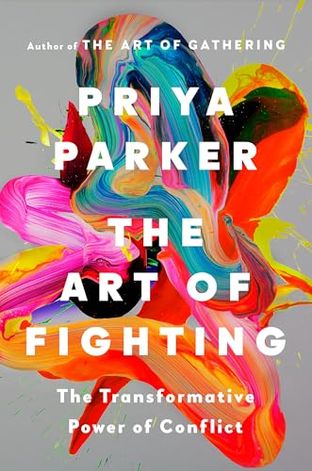
The Art Of FightingBook club questions, food & host guide
A cozy book club night for The Art Of Fighting by Priya Parker. Includes 8 spoiler-free discussion questions, food and drink pairings, a playlist, and a host guide, ready to print and share.
A club that likes nonfiction with heart, and does not mind a conversation drifting from the page into real life
Buy links are affiliate links; we may earn a small commission, at no cost to you.
A warm, practical look at conflict as something we can shape rather than something that just happens to us, written by a facilitator who has spent her career sitting in rooms where people disagree. It is the rare book that makes a club want to talk about their own lives, gently.
Why it works for clubs
- Every reader arrives with personal conflict stories, so nobody comes empty-handed
- Short, idea-sized sections make it easy to dip in and quote a favorite bit
- It reframes avoidance and peacekeeping, which almost always sparks recognition
- Practical enough that the group leaves with something to actually try
Themes & mood
Browse all themes →Warm-up questions
- 1 What was your reading setup for this one (blanket, bus seat, kitchen table at midnight), and did the book feel like company or like a nudge?
- 2 Was there a page early on where you thought, oh, she has met my family? No details needed, just tell us the feeling.
Digging in
- 1 The book treats keeping the peace as its own kind of cost. Where in your life have you paid that bill quietly, and did reading about it feel like relief or like being caught?
- 2 Which idea in here would you most want to hand to a younger version of yourself, and what would you say while handing it over?
- 3 Is there someone in your life who fights well, in the good sense? What do they do that you have never been able to copy?
- 4 The book keeps insisting that conflict can be an act of care. Did that land as comforting, or did part of you resist it? Be honest, this is a soft room.
Going deep
- 1 By the time you reached the later chapters, had the book changed what you think you are actually afraid of when you avoid a hard conversation? Name the fear, not the story.
- 2 If you could rewind one conversation from the past year and run it again using something you picked up here, what would you want to feel differently afterward? You can keep the who and what vague.
On the table
To sip
Low volume, warm room, acoustic and unhurried, the kind of music that lets a pause sit without getting awkward
Tap a track to play it. Full songs play when you're signed into Spotify.
Run of show
Host tips
- Say out loud at the start that nobody has to name names or share a real conflict if they do not want to. Permission to pass makes people share more, not less.
- Keep food within arm's reach of the seating. A group that has to get up to eat stops eating and starts performing.
- When someone tells a raw story, resist the urge to fix it. Thank them, sit in it a beat, then move on. The book would approve.
Bring the book, wear the comfortable pants, and come talk about the conversations we all keep putting off. There will be chai on the stove and banana bread coming out of the oven around eight.
Trivia
-
1
Priya Parker is best known for a book about designing gatherings. What is its title?Answer: The Art of Gathering.
-
2
What professional field did Parker train in before writing about gatherings and conflict?Answer: Conflict resolution and group dialogue facilitation.
-
3
Parker's facilitation work grew out of a dialogue method developed to bring divided communities into sustained conversation. What is that approach generally called?Answer: Sustained dialogue.
-
4
Parker has described growing up moving between two very different family cultures after her parents separated. Which two broad heritages does she draw on in her writing?Answer: Indian and American, across two households with very different customs.
-
5
Parker hosted a podcast about the design of gatherings and events. What was it called?Answer: Together Apart.
-
6
What genre shelf would you find this book on?Answer: Nonfiction, specifically self-help and social science.
-
7
Parker's central professional argument is that the most important choices about any gathering are made when?Answer: Before anyone arrives, in the purpose and design stage.
-
8
What kind of clients has Parker built her career facilitating for?Answer: Organizations, companies, communities and families working through disagreement.
Bookmarks
Rate the book
Print pack
- Question cards on kraft stock, one per card, to pass around the circle
- Printable bookmarks (three designs, cut and hand out at the door)
- Trivia half-sheets for a low-stakes round over dessert
- Scorecards with a pencil tucked into each napkin
- A recipe card for the chai and the cardamom banana bread, so guests can take the night home
Get the kit in your inbox
We'll email you this kit now, then a friendly nudge before your meeting so planning never sneaks up on you.
More book club night kits
Ready-made nights for other books your club might pick next.





Build a free kit for any book
Pick your next read, choose a vibe, and get discussion questions, food and drink pairings, a playlist, and a host guide in about a minute.
Build my night